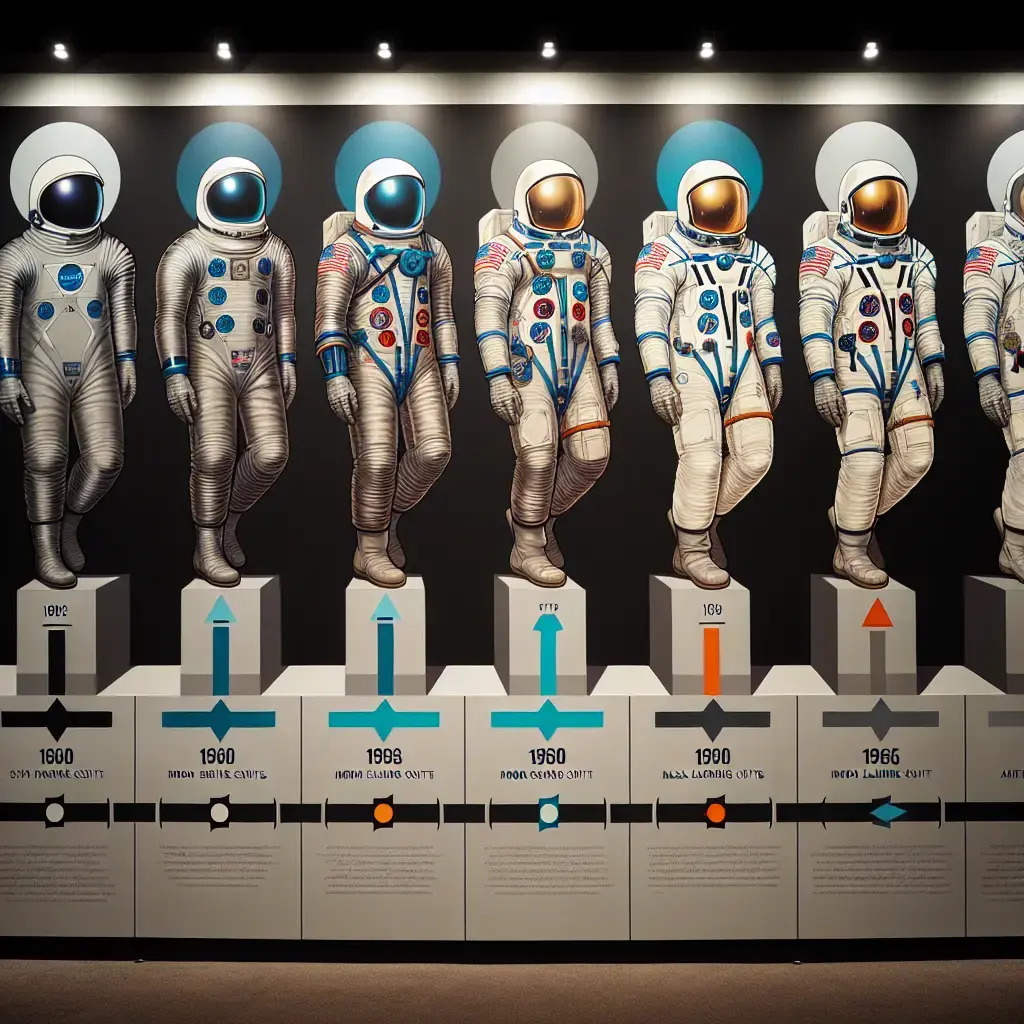
Exploring the fascinating evolution of space suits offers a unique glimpse into humanity's relentless pursuit of space exploration. From the early days of Mercury space suits to the cutting-edge Artemis space suits, NASA's innovations in astronaut attire showcase remarkable advancements in space suit technology. Each era of space exploration—spanning from Gemini space suits to the sophisticated International Space Station suits—reflects significant strides in space suit design, materials, and safety.
The Early Days: Mercury Space Suits
The history of space suits is rich with innovation. During the Mercury missions, space suits were primarily designed for function within the confines of a small capsule. These first-generation Mercury space suits focused on providing essential life support and maintaining pressure rather than mobility. Despite their limitations, these early suits laid the foundation for future advancements, demonstrating that tailored astronaut suits were indispensable for the success of manned space missions.
Advancements Through Gemini and Apollo Missions
As NASA's ambitions grew, so did the demands on space suit technology. The Gemini space suits introduced greater flexibility and comfort, allowing astronauts to perform extravehicular activities (EVAs) for the first time. The subsequent Apollo missions required suits that could withstand the harsh lunar environment while providing enough mobility for exploration. The Apollo space suits marked a significant leap forward in accommodating mobility on the moon's surface—a testament to NASA's innovative spirit.
Case Study: Apollo 13 and the Role of Space Suits
The historical significance of Apollo space suits is underscored by their critical role in missions like Apollo 13. The recent release of the Apollo 13: Survival documentary on Netflix has reignited interest in this iconic mission. This documentary highlights how the adaptability and durability of Apollo space suits were vital in ensuring the crew's survival during the mission's crisis.
Skylab and Space Shuttle: A New Era
Subsequent missions, including Skylab and Space Shuttle missions, required NASA to continually refine its space exploration gear. Skylab space suits were designed to support extended stays in orbit, emphasizing comfort and adaptability for prolonged use in microgravity environments. During this era, NASA also introduced Space Shuttle suits, which were designed for reusability and enhanced protection against the increased risks associated with shuttle launches and landings. These advancements reflected NASA's commitment to evolving its astronaut suits to meet the growing complexities of space travel.
Recent Developments: SpaceX's New Spacesuits
In a bold step forward, four civilians are preparing for a historic SpaceX mission that will test new spacesuits' capabilities (source). This mission represents a significant milestone in commercial space travel, as these advanced suits are set to undergo their first in-flight test alongside a pioneering commercial spacewalk. This endeavor highlights the continued innovation in space suit technology, driven by both governmental and private sectors.
International Space Station Suits: Durability and Adaptability
With the advent of the International Space Station (ISS), NASA faced new challenges that required further advancements in space suit technology. International Space Station suits are designed to withstand prolonged exposure to microgravity while providing maximum safety for astronauts conducting EVAs. The development of these suits focused on enhancing durability and adaptability, ensuring they could support various tasks performed by astronauts aboard the ISS.
Technological Collaborations: Nokia and Axiom Space
Looking to the future, collaborations like those between Nokia and Axiom Space aim to integrate 4G connectivity into lunar suits (source). Such partnerships exemplify how technological innovation continues to redefine what is possible in space exploration gear. Incorporating modern communication technologies into advanced space suits ensures astronauts remain connected and can relay crucial data during missions.
Artemis Space Suits: The Future Beckons
Today, as NASA embarks on the Artemis missions, the future of space suits is more promising than ever. These advanced Artemis space suits incorporate cutting-edge materials and design innovations that ensure maximum safety and functionality for astronauts venturing into deep space. The Artemis program aims not only to return humans to the Moon but also to establish a sustainable presence there, paving the way for future missions to Mars and beyond.
Lithium's Role in Modern Space Suit Materials
A crucial component driving advancements in space suit materials is lithium, which plays a significant role in high-energy batteries essential for powering modern astronaut gear (source). As demand for lithium increases, understanding trade patterns becomes vital for ensuring a steady supply for aerospace applications. This underscores how global economic factors intersect with technological developments in space suit design.
Conclusion: The Legacy and Future of Space Suit Innovation
The journey of space suit development from the Mercury missions to the Artemis program is a testament to NASA's relentless pursuit of innovation and human ingenuity. Each era of advancement in space suit technology showcases significant strides in materials science, design innovations, and safety enhancements, reflecting humanity's enduring spirit of exploration.
Mercury Space Suits: These early suits prioritized essential life support and pressure maintenance.
Apollo Space Suits: Marked a leap forward with enhanced adaptability and durability.
Gemini and Apollo Advances: Introduced flexibility and mobility.
Skylab and Space Shuttle Era: Focused on comfort and adaptability for prolonged missions.
International Space Station Suits: Enhanced durability and adaptability.
Artemis Space Suits: Incorporate cutting-edge materials for deep space exploration.
The future of space suit technology is marked by exciting collaborations and continuous improvement driven by both governmental and private sectors, paving the way for ambitious missions beyond our planet. As we look to the future, these advancements inspire us and highlight our shared pursuit to explore beyond our world.
Author: Adrianne Torres