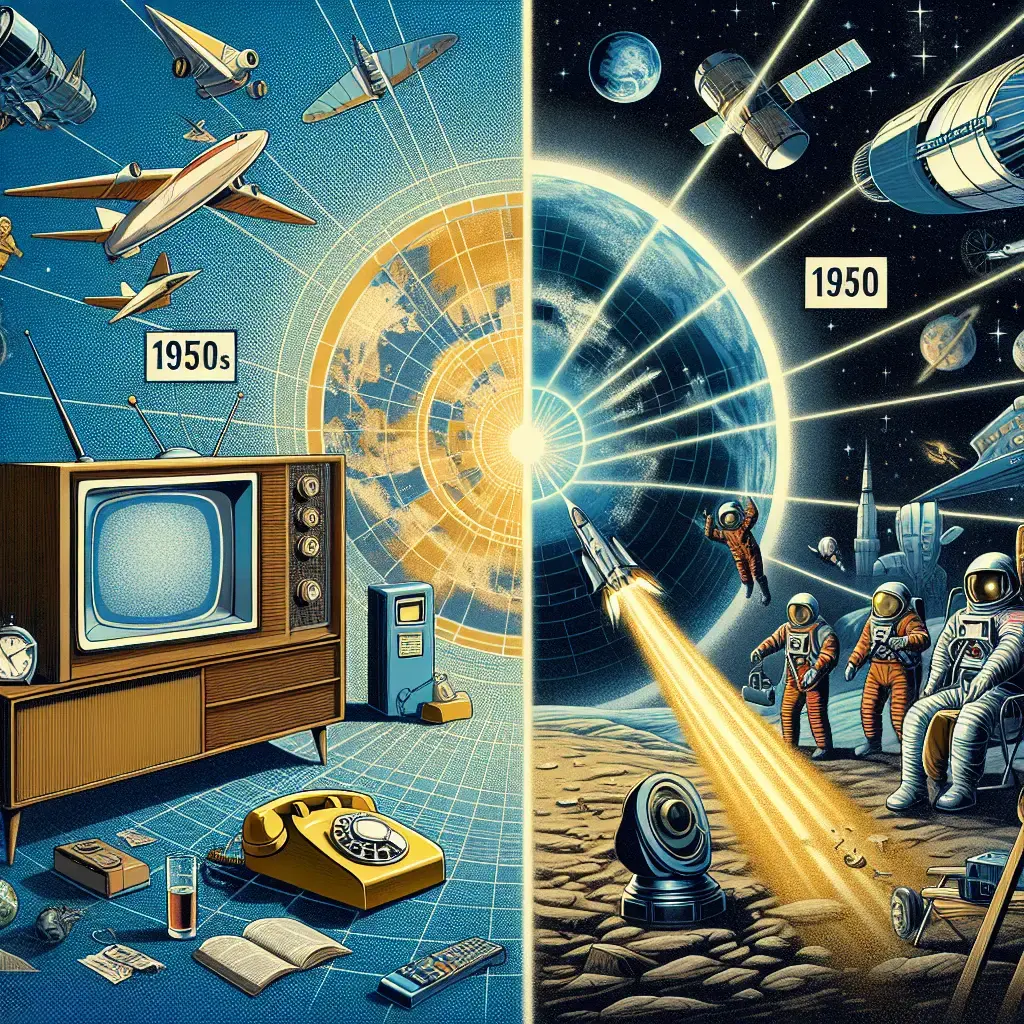
In the mid-20th century, the world witnessed a pivotal chapter in history as the Space Race unfolded between the United States and the Soviet Union. This fierce competition, fueled by Cold War tensions, marked an era of unprecedented technological advancements and left a lasting impact on space exploration history. The Space Race was not merely a quest for dominance but a catalyst for innovation and progress. Both superpowers invested heavily in developing cutting-edge technologies, leading to remarkable breakthroughs that forever transformed the landscape of space exploration and beyond.
Cold War Technology: A Catalyst for Progress
The Space Race was largely driven by Cold War tensions, which acted as a powerful catalyst for technological progress. During this time, both superpowers endeavored to outpace each other in developing cutting-edge space technologies. The resulting innovations laid a foundation for modern technology that continues to evolve and thrive.
One of the most notable achievements was the Apollo program—a symbol of NASA innovations—which exemplified the extraordinary potential of space technology development. The program's successful landing of humans on the moon marked a monumental achievement in space exploration history and underscored the significance of pushing technological boundaries. Recent events such as the upcoming Netflix documentary "Apollo 13: Survival" serve as a reminder of the enduring impact of these achievements. By revisiting this iconic mission, we can appreciate how the Space Race legacy continues to inspire new generations, bridging past accomplishments with future aspirations.
Satellite Technology and Soviet Space Achievements
The Soviet Union's contributions to the Space Race, such as the launch of Sputnik and the groundbreaking missions of cosmonauts, highlighted the importance of satellite technology. These pioneering efforts not only represented symbolic victories but also demonstrated the practical applications of space technology, which continue to influence contemporary life.
In recent years, advancements in satellite technology have facilitated innovations in various fields, including communications and Earth observation. Tools like the Landsat Explorer enable users to explore Landsat imagery, showcasing the enduring benefits of space race inventions in providing critical data for environmental monitoring and scientific research.
The Apollo Program's Impact on Aerospace
The Apollo program's impact extended far beyond its initial objectives. It spurred advancements in aerospace engineering and materials science that have fueled ongoing innovation. For example, SpaceX's upcoming mission involving four civilians is set to test new spacesuits and conduct a commercial spacewalk, illustrating how space technology breakthroughs continue to propel human exploration efforts.
Such missions demonstrate how lessons learned from past endeavors contribute to current advancements in aerospace. They highlight how technological progress from the Space Race has laid the groundwork for modern exploration initiatives, pushing boundaries further into the cosmos.
Modern Implications: From Communications to Energy Solutions
The Space Race's influence is evident in today's technologies, from communications to energy solutions. The development of satellite technology during this era paved the way for innovations like GPS and advanced weather forecasting systems. Furthermore, recent analyses of lithium trade patterns reveal its significance in emerging industries such as energy storage and aerospace—a testament to how space race contributions continue to shape contemporary technological landscapes.
In the realm of communication technology, collaborations like that between Nokia and Axiom Space to equip lunar suits with 4G capabilities underscore the ongoing integration of advanced technologies in space exploration efforts. Such partnerships illustrate how space race competition has fostered an environment where innovation thrives across multiple domains.
The Broader Influence on Science and Innovation
The Space Race not only transformed technology but also influenced scientific inquiry and innovation across various fields. By pushing the limits of what was possible, it encouraged a culture of exploration and discovery that continues to benefit society today. This spirit of innovation is evident in diverse areas, from video game development to neurodivergence research.
Moreover, events like Gamescom 2024 highlight how storytelling and digital innovation have evolved, reflecting a broader trend where space race influence on science inspires creative endeavors.
Reflecting on the Space Race Legacy
As we reflect on the Space Race legacy, it becomes clear that its impact transcends the immediate era. This period of intense competition laid the groundwork for continued exploration and technological advancement. By understanding the technological progress from the Space Race, we gain insights into how competition can drive innovation for societal benefit.
In today's rapidly advancing world, the lessons from this historical rivalry remain relevant. They remind us that by embracing challenges and fostering collaboration, we can achieve extraordinary feats that propel humanity forward.
Conclusion: Embracing the Space Race Legacy
The Space Race, a monumental period of the mid-20th century, left a lasting legacy that continues to shape technological innovation and exploration today. Here are the key takeaways:
Cold War Technology as a Catalyst: Fueled by Cold War tensions, the Space Race drove advancements in space technologies that laid the groundwork for modern innovation, exemplified by the Apollo program's moon landing.
Soviet Contributions and Satellite Technology: The Soviet Union's achievements underscored the significance of satellite technology, which has since evolved to influence communication and Earth observation, benefiting fields like environmental monitoring.
The Apollo Program's Enduring Impact: Beyond its initial success, the Apollo program spurred progress in aerospace engineering and materials science, contributing to contemporary missions like those by SpaceX.
Modern Technological Implications: The era's innovations paved the way for advancements in communication and energy solutions, as seen in modern GPS systems and partnerships like Nokia's collaboration on lunar suit technology.
Broader Influence on Science and Innovation: The Space Race inspired a culture of exploration and innovation, impacting diverse fields from video game development to neurodivergence research.
As we reflect on this transformative era, it's evident that the Space Race serves as a testament to how competition can drive technological progress. Its legacy is woven into the fabric of modern science and technology, continually inspiring new generations to reach for the stars. In a world where rapid advancements are the norm, embracing challenges and fostering collaboration can propel humanity toward extraordinary feats.
We invite you to ponder how these historical achievements continue to influence our lives. What are your thoughts on the legacy of the Space Race? Share your experiences and insights in the comments below.
Keep reaching for the stars.
Author: Adrianne Torres