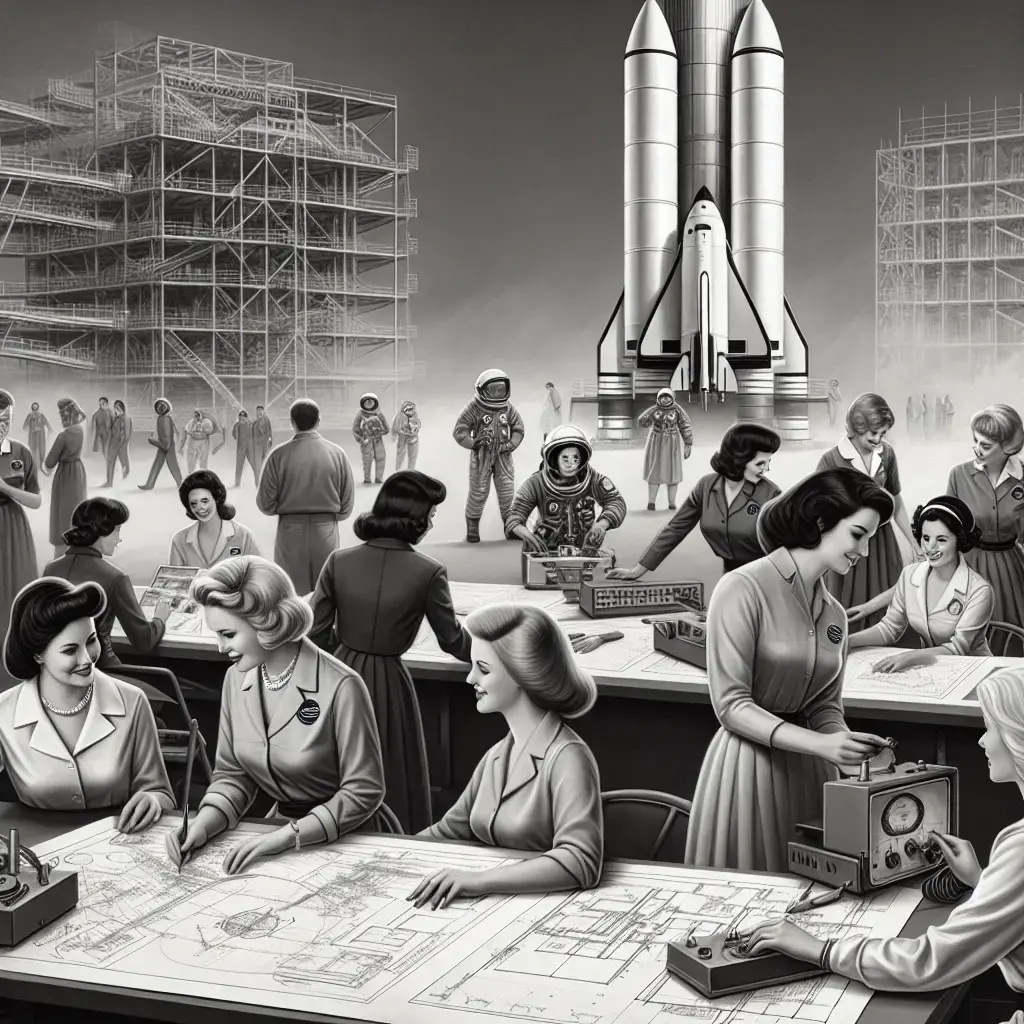
In the annals of space exploration, the story of women's contributions to early space missions is both inspiring and transformative. The narrative of female astronauts and women in NASA is one of resilience and breakthrough, challenging the traditional boundaries of gender roles in the aerospace domain. These pioneering women in space, from the first women in space to contemporary female astronauts, have carved a distinct niche in what was once an exclusively male-dominated field. Women in space history have not only redefined their roles but have also been pivotal in shaping the trajectory of early space programs.
Breaking Boundaries: The First Women in Space
The significance of women space pioneers cannot be overstated. They brought unique perspectives and invaluable expertise to the table. The narrative began with Valentina Tereshkova, the first woman in space. Her historic 1963 mission aboard Vostok 6 was more than a milestone; it was a transformative moment that showcased women's capability to perform alongside their male counterparts. This accomplishment laid the groundwork for future generations, inspiring women worldwide to aspire toward careers in space exploration and other STEM fields.
Today, we continue to draw inspiration from these early pioneers. Recent publications like Star Wars’ New History Book offer a critical lens on historical narratives, suggesting that similar reassessments of women's role in the space race can enrich our understanding of their contributions and influence.
Contributions to Early Space Programs
Women in early space programs played crucial roles behind the scenes, working as engineers, mathematicians, and scientists. Notably, NASA's "human computers," many of whom were women, performed complex calculations essential for the success of missions like Apollo 11. This unsung work was instrumental in achieving what is often heralded as one of humanity's greatest achievements: landing a man on the Moon.
While countries continue to capture stunning images of the Apollo 11 landing site, the real picture is incomplete without acknowledging the women whose calculations ensured its success. An intriguing question posed by Which Country Captured the Best Photo of the Apollo 11 Landing Site? is: how do we best honor those who contributed to these monumental missions?
Women's Role in Space Race Innovation
The space race was a period of intense innovation, and female space scientists were at the forefront. Their contributions ranged from developing new technologies to improving spacecraft design. As Steve Altemus, CEO of Intuitive Machines, discusses in his interview with TIME, contemporary missions still build on the technological foundations laid during those early years. The Odysseus landing and private space travel initiatives underscore how past innovations continue to influence modern endeavors.
Understanding where we will be in space by 2049 requires reflecting on these foundational contributions. A look at spaceflight over the next 25 years suggests that women will continue to play a critical role as humanity aims to establish a presence on the Moon and Mars.
Challenges and Triumphs of Female Astronauts
The journey for women astronauts has been fraught with challenges, from gender biases to limited opportunities. Despite these hurdles, they have consistently proven their mettle. Sally Ride, the first American woman in space, and Mae Jemison, the first African American woman in space, are exemplars of this resilience and perseverance.
As we prepare for future historic missions, such as SpaceX's planned Fram2 mission, it is essential to remember that today's advancements stand on the shoulders of these early trailblazers. Women in NASA and other space agencies continue to break new ground, pushing the boundaries of what is possible.
The Impact of Women in Space Technology
Women in space technology have not only contributed to mission success but also to developing innovative tools and methodologies that have transformed space exploration. Their work has been crucial in areas such as trajectory analysis, materials science, and life support systems.
Concerns over NASA's decision to cut the VIPER rover from its moon landing plans underscore the importance of maintaining robust scientific capabilities. Such decisions can undermine scientific progress—a reminder of how vital every contribution is to collective success.
Celebrating Women Space Mission Contributions
From early milestones to recent achievements, women’s role in space missions has been nothing short of transformative. Their legacy is celebrated not only through historical retrospectives but also through cultural expressions that tap into space race nostalgia, such as Fantastic Four: First Steps.
In conclusion, women have been—and will continue to be—integral to the success of space exploration. As we look forward to a future rich with discovery and innovation, acknowledging and celebrating women's contributions is more critical than ever. Their stories inspire future generations to reach for the stars, ensuring that space exploration remains a domain where anyone can dream big and achieve greatness.
Are you ready to join them on this journey? Whether you're an enthusiast or a professional in the field, understanding these histories equips us all for a brighter future in aerospace exploration. For more insights into women's historical contributions and future roles in space missions, consider diving into reputable sources such as NASA's History Division and publications like TIME and Space.com.
Celebrating the Legacy of Women in Space
The history of women in space exploration is a testament to resilience, innovation, and breaking boundaries. As we reflect on their journey, several critical points stand out:
Pioneering Achievements: Valentina Tereshkova's groundbreaking mission in 1963 was a catalyst for women in STEM fields, setting a precedent for future generations.
Unsung Heroes: Behind-the-scenes contributors like NASA's "human computers" played pivotal roles in monumental missions such as Apollo 11, underscoring the importance of recognizing these efforts.
Innovative Contributions: Women have been central to technological advancements, from trajectory analysis to spacecraft design, proving instrumental in the space race's success and ongoing endeavors.
Overcoming Challenges: Despite facing gender biases and limited opportunities, trailblazers like Sally Ride and Mae Jemison exemplified perseverance, paving the way for today's female astronauts.
Enduring Impact: Women's work in space technology has transformed exploration methodologies, with their influence visible in current and future missions.
As we look to the future of space exploration, the contributions of women remind us of the importance of diversity and inclusion in scientific and technological advancement. Their stories continue to inspire new generations to pursue careers in aerospace and push the boundaries of possibility.
Are you inspired by these trailblazers? Share your thoughts or experiences related to women's contributions to space exploration. Engage with this narrative by exploring further resources like NASA's History Division or acclaimed publications such as TIME and Space.com. Together, let's ensure that the legacy of women in space inspires future explorers to reach for the stars.
Thank you for joining me on this journey through history. Your engagement helps shine a light on these remarkable stories.
Author: Adrianne Torres